Cold Hard Truth: Stagnation Kills Successful Businesses

Authored by
Flipcarbon
Date Released
26 November, 2025
Categories
Blog
I want to start with a number that reveals the true picture: 90%.
That’s the approximate percentage of companies that were on the Fortune 500 list in 1955 that are no longer on it today. Think about that. These were the giants, the industry leaders, the ones who supposedly had all the answers. They had the best people, the biggest budgets, and the most established processes.
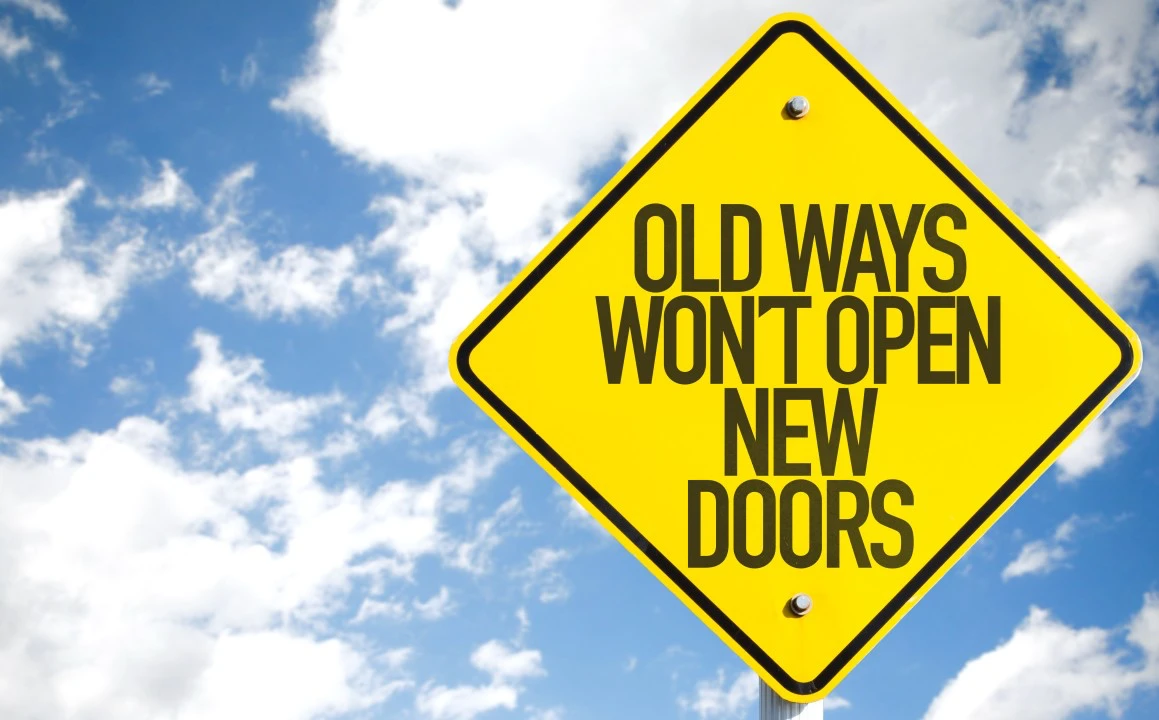
Where did they go? They were not all victims of a sudden, unpredictable disaster. Many, maybe most, were killed by a quiet, subtle, yet incredibly lethal phrase: “This is how we’ve always done it.”
It’s a phrase that sounds comforting, like a warm blanket on a cold day. It represents experience, stability, and tradition. But in today’s world of rapid technological change, instant information, and non-stop disruption, it’s not a cozy blanket… it is a coffin.
I call it the Stagnation Trap, and it is the biggest threat to your business, your career, and even your personal growth.
In a constantly moving river, if you stop paddling, you don't stay in one place. You get swept backward. And in the modern world, the river is turning into a raging torrent.
Story of the Stuck System
During my initial days of consulting, I worked on a project for a company that made fantastic products, but their internal systems felt like something actively stifling their growth. It was like watching a Formula 1 car driving through a narrow, muddy lane.
The issue wasn't the product; it was their workflow for approving any major business decision. It involved five different departments, two separate physical sign-off folders, and weeks, sometimes a month, of minimum turnaround time.
I saw immediately that the friction came from one specific, grinding step: the ineffective decision-making process itself. This wasn't just a process; it was a swamp of endless meetings. Meetings without clear agendas, meetings without any specific direction, and, most frustratingly, meetings without closure. Just talking, talking, and more talking, all leading nowhere definitive.
I asked the CEO, a wonderful, seasoned professional named Ms S, why they continued this way. She paused, looked at her overloaded calendar (which was practically a monument to wasted time), and sighed. “Oh, that? We have always done it this way. We want to ensure everything is perfect before the rubber hits the road.”
But the irony was brutal. While aiming for perfection, they would invariably miss critical milestones. Projects would get delayed, teams would suffer severe burnout, and clients, the people who mattered most, were left dissatisfied. The process designed for “perfection” was delivering failure.
I dug a little deeper, and here’s the kicker: A few years back, when Mr R (the founder) was running the organisation, this complex, consensus-driven, meeting-heavy style was his decision-making method. It was his signature. Now, he had appointed a very dynamic professional as CEO to modernise the organisation, but the work process remained exactly the same.
Mr R had moved out of the executive role three years prior. He is probably sitting on a beach somewhere, sipping a cocktail and enjoying retirement. But the legacy of his complex approval ritual continued. It had become a ghost of a process, a ritual disconnected from its original purpose of serving the founder.
No one ever stopped to ask why they were doing it; they only knew how they were doing it. It was the epitome of the “This is how we’ve always done it” trap. It wasn’t just inefficient; it was truly embarrassing to realise how much time, energy, and potential they were sacrificing to a phantom.
Roots of Resistance
Why do smart people, people like Ms S, people like you and me, fall into this trap?
It's not about being lazy or unintelligent. It’s about being deeply, fundamentally human.
Our brains are wired for efficiency and safety. Change, no matter how good the outcome, requires effort and carries risk. Sticking with the known, even if it’s painful or slow, feels safer than venturing into the unknown.
There are two main psychological culprits at play here:
Status Quo Bias: The Comfort Zone Curse
Think of your comfort zone as a well-worn, perfectly moulded armchair. You know exactly where the springs squeak and where to put your coffee. Status Quo Bias is the psychological tendency to prefer things to stay the way they are. Changing a process, trying a new technology, or learning a new skill means moving from the comfortable armchair to a scary, wobbly new chair. We stick with the old one not because it’s the best, but because it's known. The energy required to change (the transaction cost) often feels greater than the pain of the status quo.
Effort Justification: The "Sunk Cost" Lie
This is a sneaky one. When we invest a lot of time, energy, or money into creating a system, we become psychologically committed to it. We think, “I have spent ten years mastering this complicated system. If I admit there's a better, simpler way, all those ten years were wasted.”
Our brain tries to justify the effort we have already spent, convincing us that the old, complicated way must be better, or else our past commitment was foolish. We confuse investment with value. The value of the past is not measured by the time we spent on it, but by what it prepares us for in the future.
Paradox of Stagnation
This brings us to the most critical realization for the modern world, whether you’re a multi-million-dollar corporation or just trying to learn a new language.
The goal of remaining static is now an impossibility.
Imagine you are standing on a giant, slow-moving treadmill. To stay in the same spot relative to the room, you have to walk forward at the speed of the machine. If you stop walking, the machine pushes you backward.
Today’s world is that treadmill. Technology, competition, and consumer expectations are moving at an ever-increasing pace. If you keep doing things exactly the way you did them last year, or even last quarter, you are not maintaining your position; you are actively losing ground.
Your competitor has adopted new AI tools. Your industry has shifted to a new distribution model. Your customers expect instant, personalised service. If you are operating with last year’s tools and last year’s mindset, you are effectively operating at a loss.
To stay relevant, you must evolve. To remain static, you must run.
This is the Paradox of Stagnation. The price of doing nothing is not “no change”; the price is being rendered obsolete.
Path Forward (Actionable Steps)
So, how do we break the ghost process, conquer the comfort zone, and embrace evolution? It starts not with a massive overhaul, but with three simple, narrative-driven questions you can ask yourself, your team, or your company.
Step 1: The "Why" Test: Find the Ghost
When you encounter a process that feels clunky, complex, or time-consuming, don't immediately try to optimize how you do it. First, ask: “Why are we doing this at all?”
Go all the way back to the source. Don’t accept “Because of policy” or “Because that’s the form.” Ask, “What problem was this process originally created to solve?”
In almost every organisation I have consulted, at least 20–30% of processes exist simply because they existed. They have lost their purpose. They have outgrown their relevance.
Find the ghost behind the process: founder, old regulation, past risk, or outdated technology.
By finding the “ghost in the machine,” you can often delete an entire step instead of just making it 5% faster.
Step 2 : The "Amateur" Mindset : Naïve Approach
As experts, we get too close to the process. We see the complexity and accept it. To break free, you need to deliberately adopt the Amateur Mindset.
Find someone, a new intern, someone from a completely different department, or even a friend, and explain your clunky process to them step-by-step.
They will ask beautifully naïve questions that you, the expert, have trained yourself to ignore. “Why can’t you just use a shared drive?” “Why do you print it if you just scan it back in?” Their simplicity is your weapon.
A truly great leader doesn't just listen to the experts; they make space for the “fool” to point out that the emperor (the process) has no clothes.
Step 3 : The "20-Mile March": Start Small and Non-Negotiable
Change fails when we try to do too much too soon. It's overwhelming and fuels the Status Quo Bias. Instead, embrace the concept of the “20-Mile March” a term used by explorers to describe consistent, non-negotiable daily progress, regardless of the conditions.
Don't say, “We will innovate everything!” Say, “Every Monday morning, we will identify one small, low-risk process to eliminate or automate.”
This could be eliminating one redundant meeting, trying one new software feature, or dedicating 30 minutes to learning one new skill. It's not about making a massive jump; it's about making evolution a daily, consistent habit. Small, non-negotiable steps create momentum that eventually makes the old way feel more difficult than the new way.
Conclusion
“This Is How We’ve Always Done It” is the comfortable, silent killer of potential.
It tells us we can rest on our past successes, but in a world defined by exponential change, the past is a rapidly shrinking island.
You are not judged by the effort you invested yesterday, but by the capacity you have for innovation today. The world doesn't care how hard you used to work on that old spreadsheet; it only cares about the value you create now.
So, I challenge you: Identify the ghost process you are still serving out of habit or fear. Don't be afraid to be the “amateur” who asks the simple, uncomfortable question.
Remember the Paradox: The only way to keep your edge is to constantly sharpen it. You must be willing to burn the old map and trust the compass of innovation.
In the modern river of life, the current is too strong for standing still. If you’re not moving forward, you’re already drowning in yesterday’s success.